Prayer, charity, fasting, and service

How Muslims Worship

Worship in Islam connects everyday life to God through prayer, gratitude, discipline, generosity, and community.

For visitors

A welcoming place to learn

These pages are written for neighbors, guests, students, coworkers, and anyone curious about what Muslims believe and how a masjid serves the community.

The Five Daily Prayers

Muslims pray five times a day. Prayer includes standing, bowing, prostrating, reciting Qur'an, and speaking directly to God.

The Five Pillars

The five pillars are the testimony of faith, prayer, zakat charity, fasting Ramadan, and pilgrimage to Makkah for those able to go.

Worship Beyond Ritual

Serving parents, feeding someone, telling the truth, forgiving, visiting the sick, and helping neighbors can all be worship when done sincerely for God.

Prayer Shapes the Day

The five daily prayers create pauses throughout the day to remember God. A Muslim may pray at home, work, school, outdoors, or in the masjid. The prayer is structured, but it also includes personal humility, focus, and a direct turning toward the Creator.

Ramadan and Self-Discipline

During Ramadan, Muslims fast from dawn to sunset, avoiding food and drink while working to improve patience, gratitude, generosity, and self-control. The fast is not meant to be hunger alone; it is a month of spiritual renewal and concern for others.

Charity as Worship

Giving is central in Islam. Zakat is an annual obligation for those who qualify, and voluntary charity is encouraged at all times. Muslims are taught that wealth is a trust from God and that caring for the vulnerable is part of worship.

Daily salah

How Muslims Pray

Muslim prayer, called salah, follows a repeated pattern of standing, bowing, prostrating, and sitting. Each prayer is made of units called rak‘ahs. The guide below explains the movement and meaning in plain English.

Fajr 2 Dawn prayer
Dhuhr 4 Midday prayer
Asr 4 Afternoon prayer
Maghrib 3 Sunset prayer
Isha 4 Night prayer
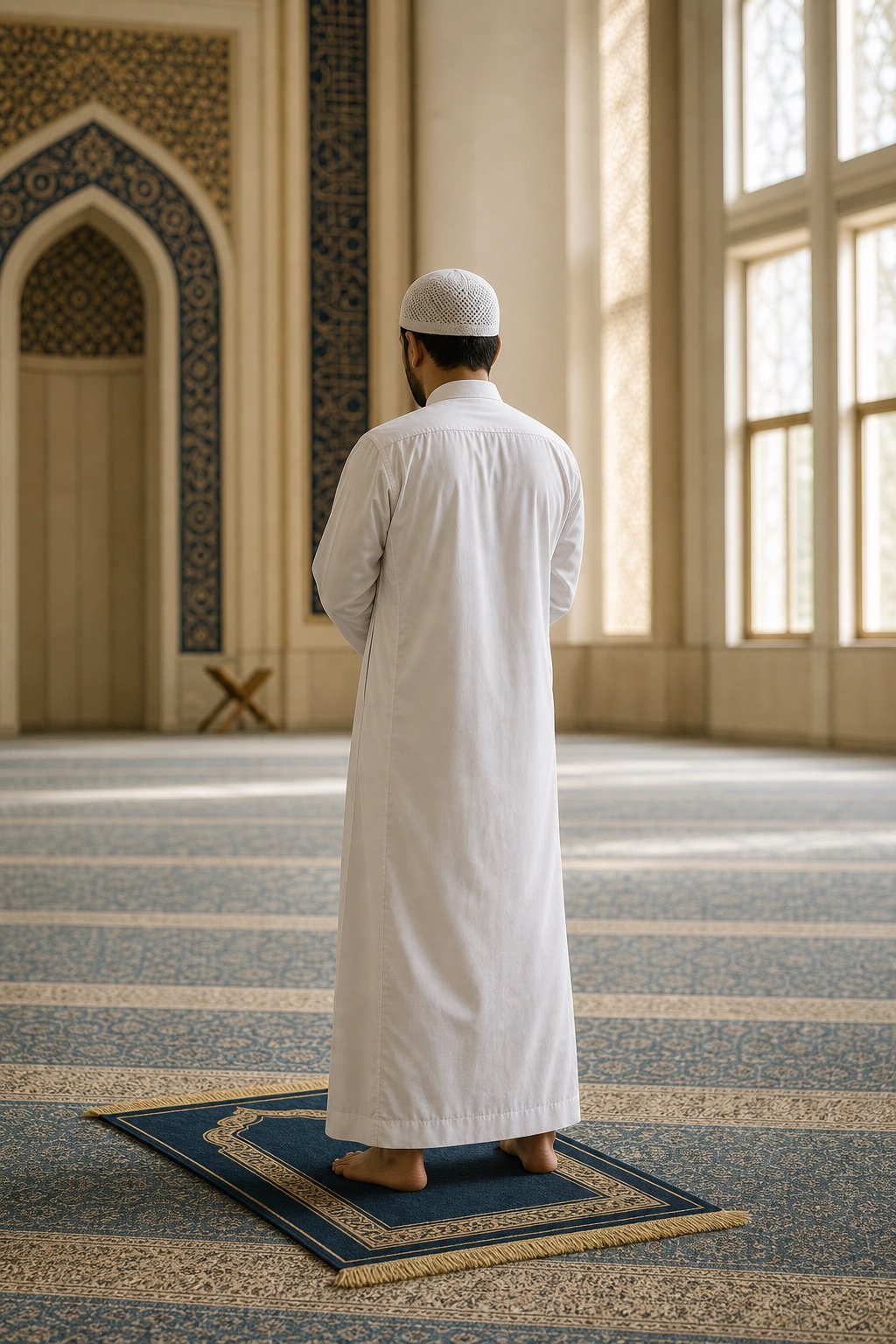
Standing
Step 1

Standing

God is greater.

The prayer begins by raising the hands and turning fully toward God. Muslims then recite Qur’an, including Al-Fatihah (The Opening), the opening chapter.

Bowing
Step 2

Bowing

Glory be to my Lord, the Magnificent.

The person bows with humility, praising God’s greatness.

Rising
Step 3

Rising

God hears the one who praises Him. Our Lord, to You belongs all praise.

The worshiper rises from bowing and thanks God.

Prostrating
Step 4

Prostrating

Glory be to my Lord, the Most High.

The forehead touches the ground. This is the most humble posture in the prayer.

Sitting
Step 5

Sitting

My Lord, forgive me.

The worshiper sits briefly between two prostrations and asks for forgiveness.

Closing
Step 6

Closing

Peace and God’s mercy be upon you.

The prayer ends by turning to the right and left with a greeting of peace.

English walkthrough

Fajr Prayer: What It Means

Fajr has two obligatory rak‘ahs. Many Muslims also pray two sunnah rak‘ahs before it, but the guide below explains the two obligatory rak‘ahs in English. In congregation, the imam usually recites the Qur’an aloud in Fajr.

Some opening supplications and short Qur’an selections vary by school, teacher, and community. This is a common beginner-friendly explanation of the sequence.

Before starting
Preparation

Before starting

A Muslim silently intends to pray Fajr for Allah. The intention does not need a spoken formula.
Opening takbir
Rak‘ah 1

Opening takbir

God is greater.
Opening supplication
Rak‘ah 1

Opening supplication

Glory and praise are Yours, O Allah. Blessed is Your name, exalted is Your majesty, and there is no god besides You.
Seeking protection and beginning
Rak‘ah 1

Seeking protection and beginning

I seek refuge in Allah from the rejected Satan. In the name of Allah, the Most Compassionate, the Most Merciful.
Al-Fatihah (The Opening)
Rak‘ah 1

Al-Fatihah (The Opening)

All praise is for Allah, Lord of all worlds, the Most Compassionate, the Most Merciful, Master of the Day of Judgment. You alone we worship and You alone we ask for help. Guide us to the straight path.
Example: Ad-Duha (The Morning Brightness)
Rak‘ah 1

Example: Ad-Duha (The Morning Brightness)

By the morning brightness and by the night when it becomes still: your Lord has not left you, nor is He displeased. What comes later will be better for you than what came before, and your Lord will give to you until you are content. Did He not find you orphaned and give you shelter, find you searching and guide you, find you in need and enrich you? So do not mistreat the orphan, do not push away the one who asks, and speak openly of your Lord’s blessings.
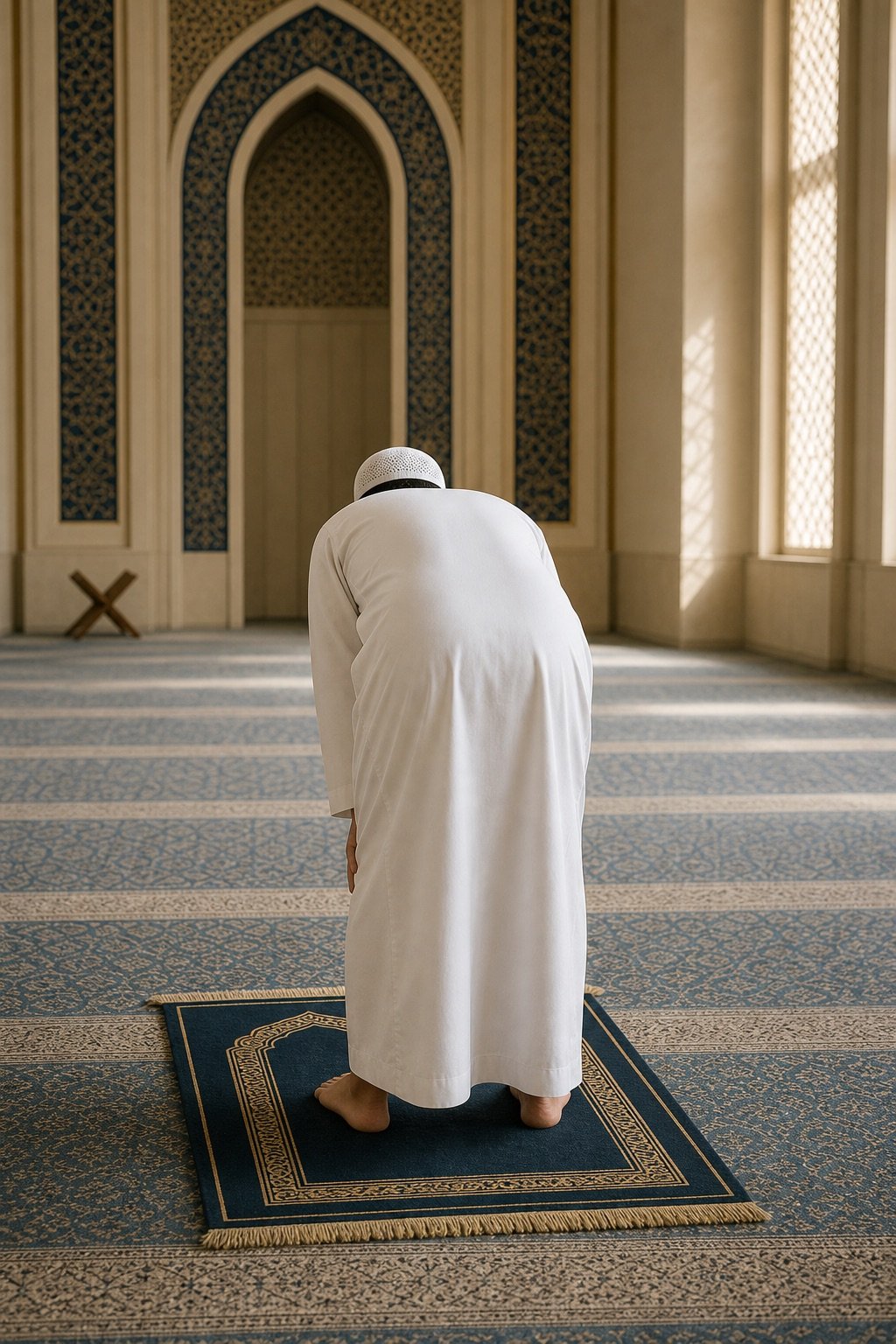
Bowing
Rak‘ah 1

Bowing

God is greater. Glory be to my Lord, the Magnificent.
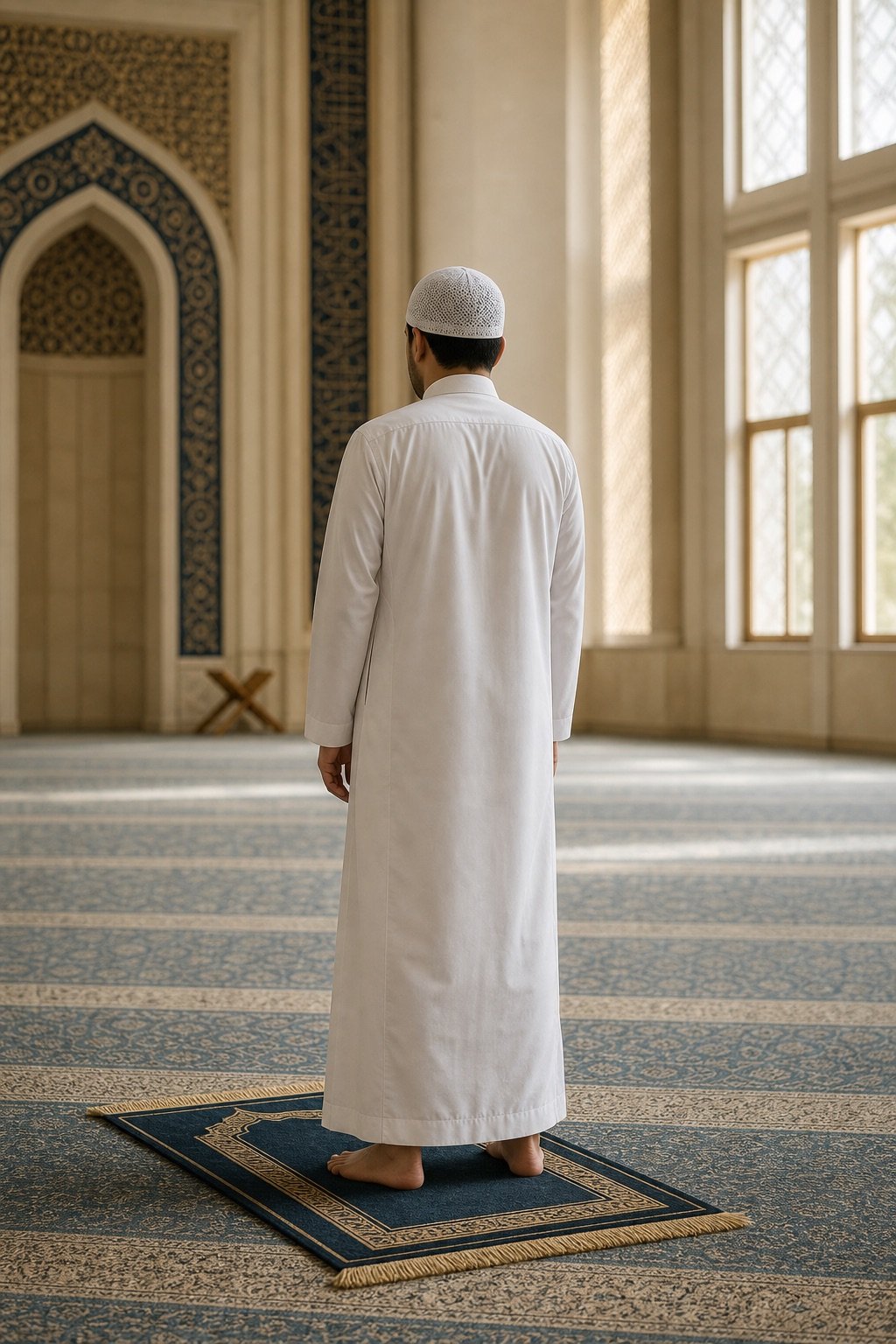
Rising from bowing
Rak‘ah 1

Rising from bowing

Allah hears the one who praises Him. Our Lord, to You belongs all praise.
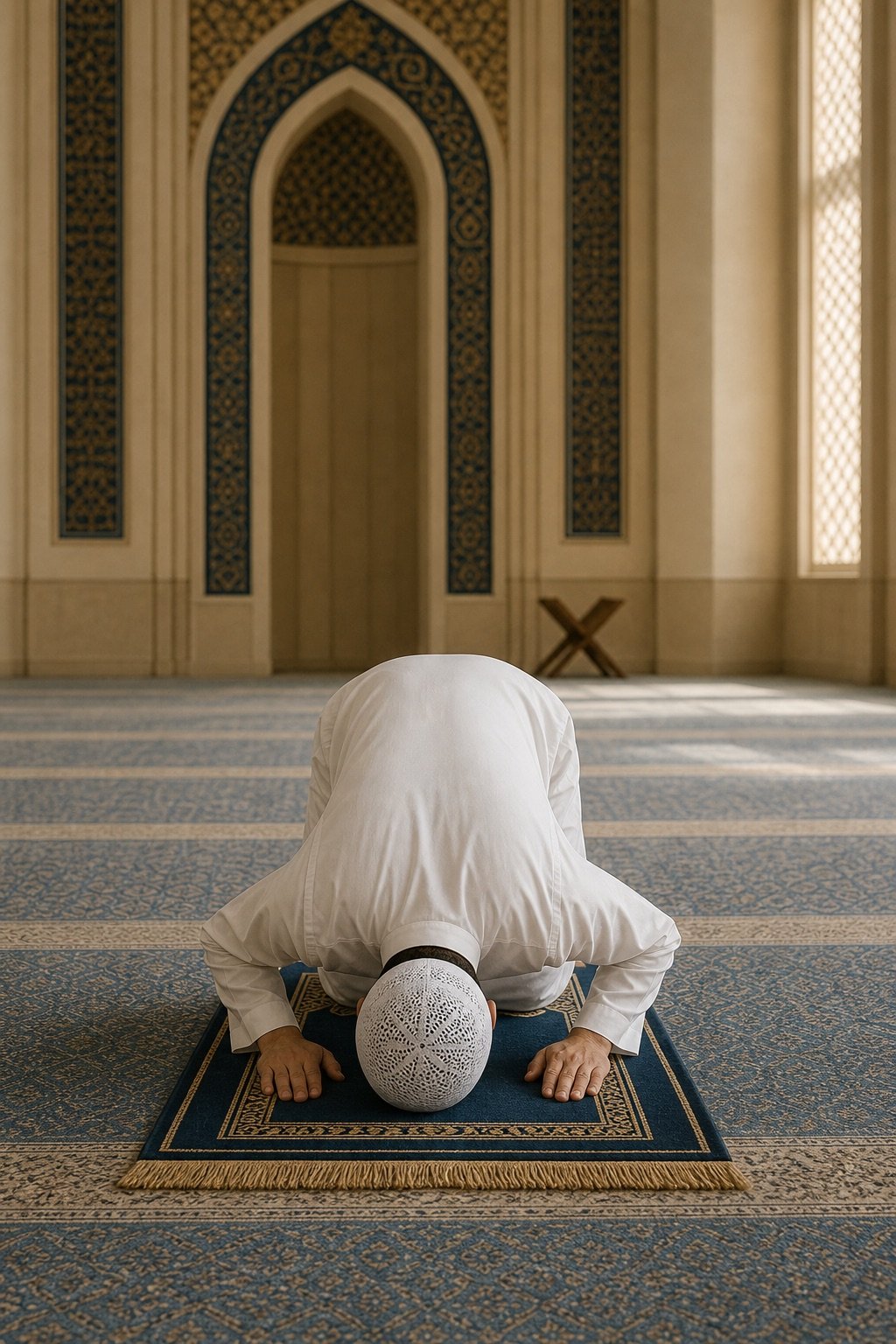
First prostration
Rak‘ah 1

First prostration

The worshiper says, “God is greater,” then prostrates and says, “Glory be to my Lord, the Most High.”
Sitting between prostrations
Rak‘ah 1

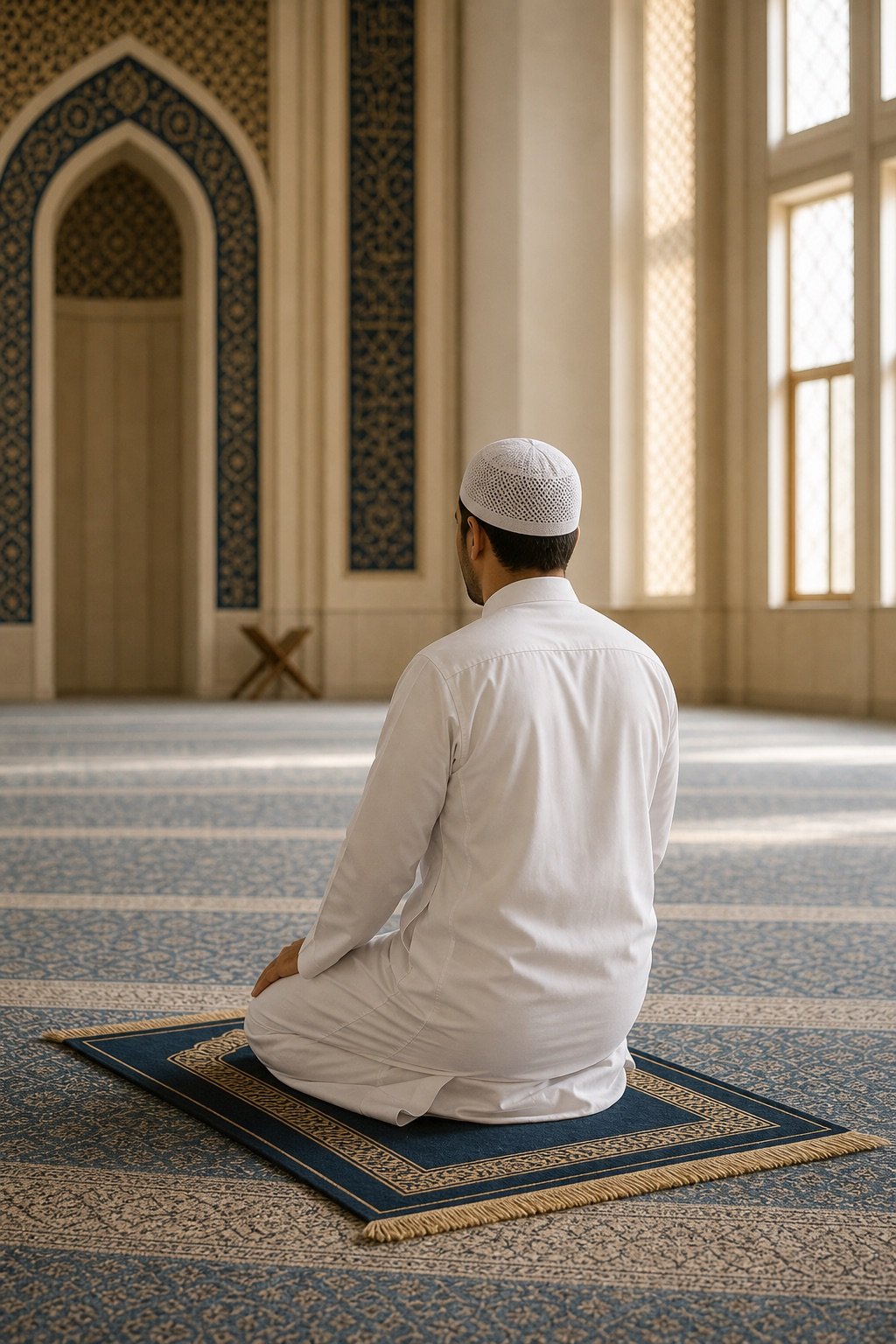
Sitting between prostrations

The worshiper sits briefly and says, “God is greater. My Lord, forgive me.”
Second prostration
Rak‘ah 1

Second prostration

The worshiper says, “God is greater,” then prostrates again and says, “Glory be to my Lord, the Most High.”
Standing for the second rak‘ah
Rak‘ah 2

Standing for the second rak‘ah

God is greater. The worshiper stands again to begin the second unit of Fajr.
Al-Fatihah (The Opening)
Rak‘ah 2

Al-Fatihah (The Opening)

All praise is for Allah, Lord of all worlds, the Most Compassionate, the Most Merciful, Master of the Day of Judgment. You alone we worship and You alone we ask for help. Guide us to the straight path.
Example: Ash-Sharh (The Relief)
Rak‘ah 2

Example: Ash-Sharh (The Relief)

Did We not open your heart for you, lift from you the burden that weighed on your back, and raise your mention? So truly, with hardship comes ease; truly, with hardship comes ease. When you are finished, keep striving, and turn your longing toward your Lord.
Bowing
Rak‘ah 2

Bowing

God is greater. Glory be to my Lord, the Magnificent.
Rising from bowing
Rak‘ah 2

Rising from bowing

Allah hears the one who praises Him. Our Lord, to You belongs all praise.
First prostration
Rak‘ah 2

First prostration

The worshiper says, “God is greater,” then prostrates and says, “Glory be to my Lord, the Most High.”
Sitting between prostrations
Rak‘ah 2

Sitting between prostrations

The worshiper sits briefly and says, “God is greater. My Lord, forgive me.”
Second prostration
Rak‘ah 2

Second prostration

The worshiper says, “God is greater,” then prostrates again and says, “Glory be to my Lord, the Most High.”
Final sitting: tashahhud
Closing

Final sitting: tashahhud

All greetings, prayers, and good things belong to Allah. Peace be upon the Prophet, and upon us and the righteous servants of Allah. I testify that there is no god but Allah, and Muhammad is His servant and messenger.
Prayers for the Prophet
Closing

Prayers for the Prophet

O Allah, send prayers upon Muhammad and the family of Muhammad, as You sent prayers upon Abraham and the family of Abraham. Surely You are Praiseworthy, Glorious.
Supplications before the greeting
Closing

Supplications before the greeting

Our Lord, give us good in this life and good in the next life, and protect us from the punishment of the Fire. O Allah, forgive me, have mercy on me, guide me, protect me, provide for me, and help me remember You, thank You, and worship You well.
Final greeting
Closing

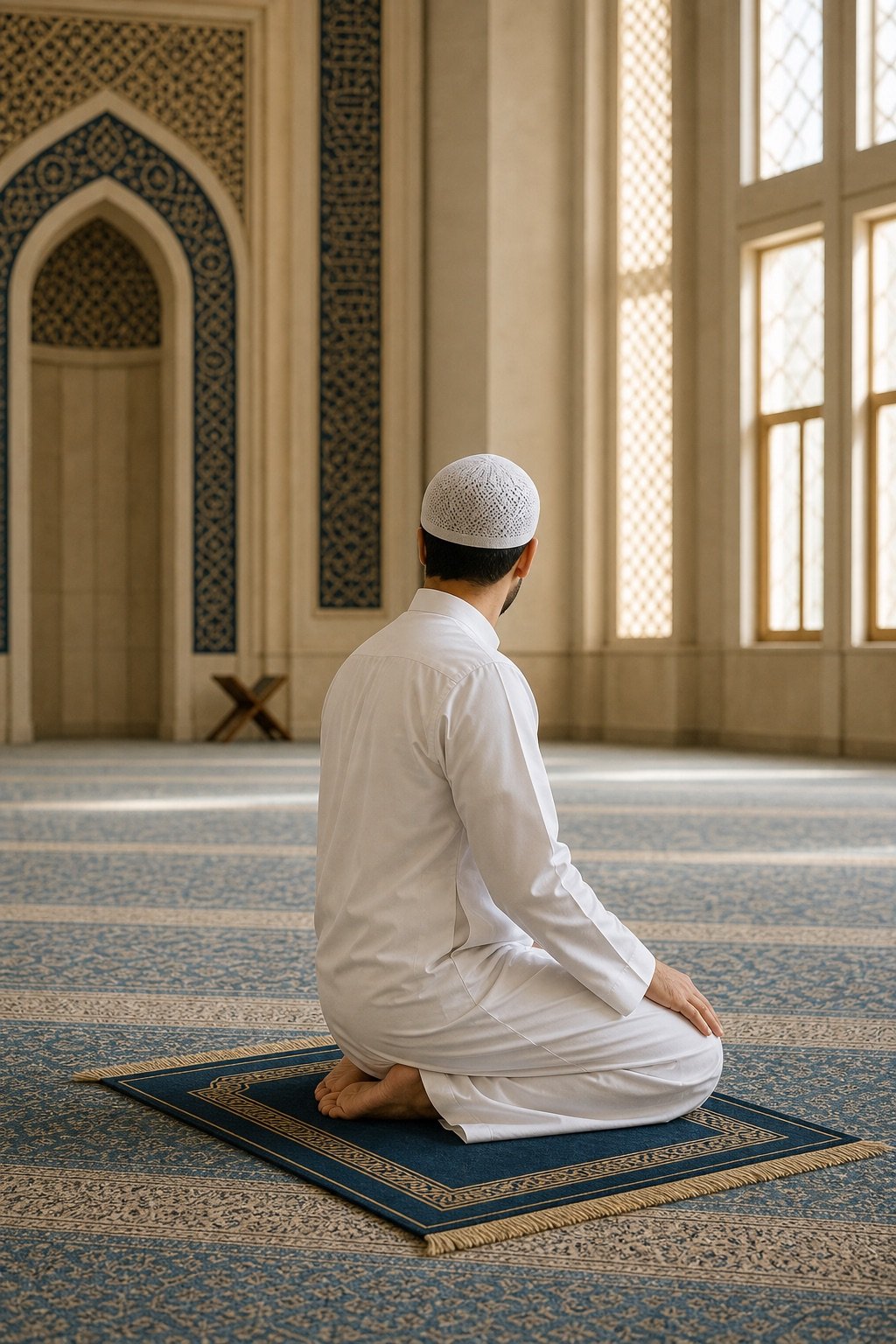
Final greeting

Peace and Allah’s mercy be upon you. The worshiper turns right and left to end the prayer.
Prayer

A daily rhythm of remembrance.

Fasting

Discipline, gratitude, and empathy.

Charity

Care for the poor and shared responsibility.

Want to talk?

Questions are welcome.

Send us a note or visit the masjid. We are happy to explain what Muslims believe and what happens in the prayer space.

Contact Us